












Mi-STAR invites you to explore the curriculum through a selection of sample materials. Explore classroom-ready lessons and connections to STEM careers.
- Mi-STAR Off-the-Shelf Lessons
- NGSS Career Resources
- OER Unit 6.4: Forces and Motion
Mi-STAR Off-the-Shelf Lessons
Off-the-shelf lessons are standalone learning experiences that introduce students to new science practices and crosscutting concepts so that they are prepared to engage in a full Mi-STAR unit. Learn more about Mi-STAR's Off-the-Shelf Lessons here, and try out the following sample Off-the-Shelf Lessons in your classroom. Each lesson takes approximately one week to implement.These lessons are shared under the creative commons Attribution-NonCommercial-ShareAlike license (https://creativecommons.org/licenses/by-nc-sa/3.0/legalcode and https://creativecommons.org/licenses/by-nc-sa/3.0/).
OTS Lesson: Claim, Evidence, Reasoning, and Argument

This lesson plan introduces students to the science and engineering practice of Argumentation. In the Mi-STAR curriculum, argumentation supports students to develop critical thinking skills and to make sense of real-world phenomena and solve problems.
OTS Lesson: Well-Defined Criteria and Constraints

This lesson plan introduces students to the engineering practice of Defining Problems. In the Mi-STAR curriculum, defining problems help students to approach their Unit Challenge Scenario and break it down into manageable pieces.
 OTS Lesson: Using a Decision Matrix to Compare Solutions for an Ecological Problem
This lesson plan introduces students to the engineering practice of Comparing Solutions. In the Mi-STAR curriculum, defining problems help students to narrow down solutions. In this lesson, students consider strategies for managing invasive species.
OTS Lesson: Interpreting Graphs
Many middle school students are comfortable with bar graphs but become unsure when they encounter unfamiliar graph formats. This can lead to frustration and disengagement. This lesson helps students build confidence and develop strategies for exploring unfamiliar graphs and conventions.
 OTS Lesson: Moon Phases
In this first Off-the-Shelf lesson on the Earth-Sun-Moon system, students investigate the phenomenon of cyclical moon phases as viewed from Earth. What do we see, and why do we see it? What patterns are observable?
OTS Lesson: Eclipses
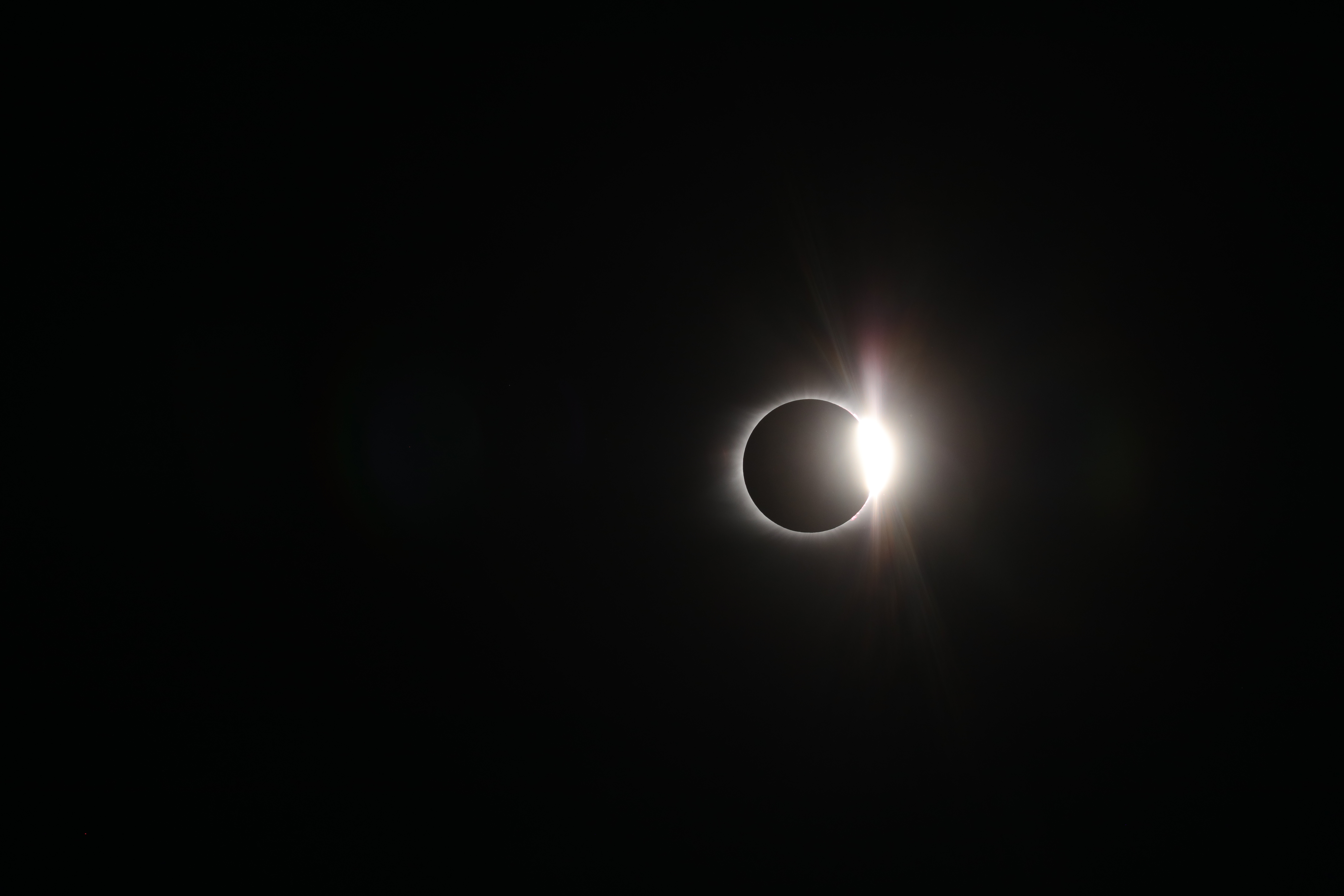
In this lesson, students build upon their prior knowledge of the Moon's phases and orbit around Earth to explain the cause of both solar and lunar eclipses.
OTS Lesson: Systems and System Models

This lesson plan is designed to introduce students to the crosscutting concept of Systems and Systems Models, including supports for remote learning.
Image sources:
Mi-STAR Career Resources
Mi-STAR Career Resources Website

https://sites.google.com/mtu.edu/mi-starstemcareerresources/home
Classroom-tested and contributed by classroom teachers!
NASA Career Connection Explorations
Career Connection Explorations (CCE) enhance student understanding of NGSS’s disciplinary core content related to Earth System Science and Space Science through the lens of NASA resources and professionals. CCEs are stand-alone investigations, useful to any teacher regardless of the curriculum they use.
Each CCE is composed of four phases:
Phase 1: Introduction - An introduction to the CCE career and a chance for students to think about their prior interests in the career.
Phase 2: Day in the Life - A reading activity that introduces students to an actual person with the CCE career.
Phase 3: Try It Out! - Students engage with one or more activities that lets them try out some of the NASA tools and/or data used in the CCE career.
Phase 4: Mind Mapping - A mind mapping exercise, where students work in small groups and then as a class to brainstorm as many other careers that benefit directly and indirectly from the CCE career.
Career Connection Exploration | What Students Do | Mi-STAR Unit Tie-in |

CCE#1 - Meteorologist | Students explore what a typical workday is like for a meteorologist and try out some of the tools used to monitor, forecast, and study the weather. | 6.1 - The Water Cycle 8.5A - Regional Climate 8.5B - Weather 8.7 - Global Climate Change |
| Students explore what it is like to be a volcanologist and engage with NASA related tools and data that are used to monitor volcanos and predict eruptions. | 7.2A - Volcanoes 8.2 - Fossils, Rocks, and Diversity 8.6 - Reducing the Impacts of Natural Hazards |

CCE#3 - Geospatial Analyst | Students explore what it is like to be a geospatial analyst and try their hand at applying some of the tools and data that geospatial analysts use to solve problems. | 6.1 - The Water Cycle 7.2B - Earth's Dynamic Surface |

CCE#4 - Science Communicator | Students explore what it is like to be a science communicator and get a chance to translate scientific information so that it can be comprehended and interesting to non-scientists. | 7.2B - Earth's Dynamic Surface 7.5 - Our Drinking Water Resources 8.4 - Force and Gravity in Solar System Motion 8.5A - Regional Climate 8.6 - Reducing the Impacts of Natural Hazards 8.7 - Global Climate Change |

These resources were supported in part by funding provided by the National Aeronautics and Space Administration (NASA), under award number 80NSSC20M0124, Michigan Space Grant Consortium (MSGC).
OER Version
Unit 6.4
“Protect Your Cell Phone: Forces and Motion”
 This unit has been reviewed by the NextGenScience (formerly Achieve) Science Peer Review Panel and has been identified as a quality example of NGSS design. See the EQuIP Review Report on this page.
The unit is being shared as an Open Educational Resource (OER) under the creative commons Attribution-NonCommercial-ShareAlike license (https://creativecommons.org/licenses/by-nc-sa/3.0/legalcode and https://creativecommons.org/licenses/by-nc-sa/3.0/).
The materials and videos provided here provide an “on ramp” to help teachers implement this unit in classrooms. Together, these resources provide condensed information about the unit as well as essential background content.
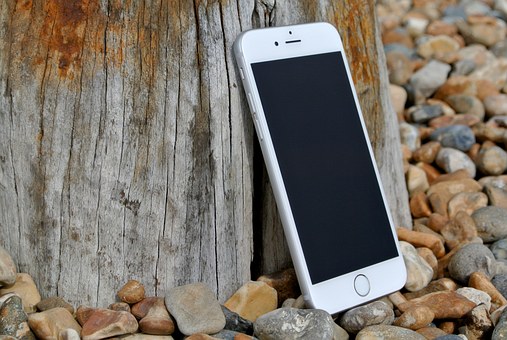
In this unit, students are challenged to solve a common problem - how to protect a cell phone from being damaged during everyday use? Throughout the unit, students use hands-on experiences and systems modeling to explore properties of force and motion, while planning and carrying out fair investigations for their cell phone case designs.
Unit Challenge Question: How can we design a case that protects a cell phone from breaking?
Assessments:
To access and use the assessments, rubrics, and answer keys for this unit, send an email to Mi-STAR@mtu.edu with your request along with verification that you are an educator.
Unit Challenge Student Products & Teacher Resources:
6.4 Unit Challenge Resources
Download Unit:
6.4 Lesson Plans and Resources
Unit Roadmap Resources:
Unit 6.4 Roadmap
Video: How to use a Roadmap